It all depends on the kitchen and the style of the home—but generally, less is more. When selecting a material, consider how the finish will work with other natural textures in the space—something like honed stone or soft veining pairs beautifully with wood or woven accents. And, keep the surface clean with just a few beautiful, functional pieces like a ceramic bowl, a great cutting board, or a favorite pitcher to add charm without clutter.
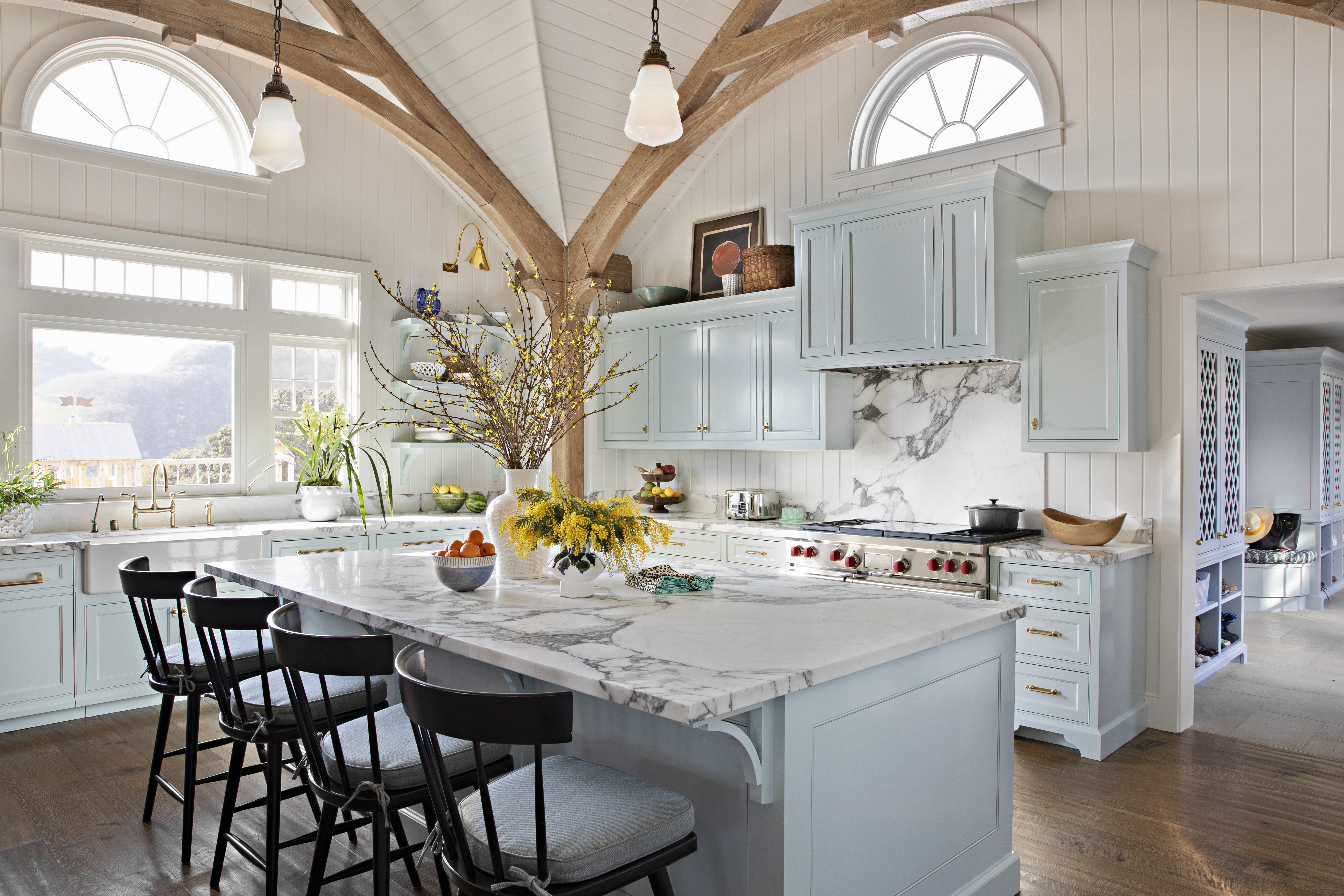
The Kitchen Mint To Be

Joe Lucas
Interior Designer
Joe Lucas, founder and principal of Los Angeles-based Lucas Studio, is regarded for his signature style that combines East Coast tradition with West Coast cool, always with a mix of texture and color, and seasoned with curated finds from his travels abroad.
Joe Lucas, founder and principal of Los Angeles-based Lucas Studio, is regarded for his si...
Bold veining can be beautiful—but it can also overpower a space if overused. If you fall for a dramatic stone, consider using it just on the island and pairing it with a simpler stone on the countertops. To tie everything together, pull a color from the veining into the cabinet paint finish. It creates a thoughtful, cohesive look.
I like to match the hardware to the plumbing finish for a cohesive look. But I always keep the kitchen’s hardware unique to that space—I never repeat it in other rooms. It makes the kitchen feel intentional and a little more special.
I like when the wood floors from the rest of the home continue into the kitchen—it creates a seamless look and feels warmer underfoot. However if the style of the house calls for more of a stone floor, I think it can be so beautiful to have that be the showstopper of the room depending on the look you are going for.
I always start by matching the hardware to the plumbing finish, then think about how much I want it to stand out. I like something simple, but with just enough detail to feel designed. I never repeat the kitchen’s hardware in other rooms—it keeps the space feeling special. I usually opt for knobs on doors and pulls on drawers. And don’t forget: smoother finishes are easier to wipe down, which is key when you're dealing with kitchen messes.
We loved it because it’s a really subtle color that changes in different lights. Sometimes, it reads like a light blue without being too powder blue and other times it seems more light green without being too tropical green. That kitchen gets so much natural light that it is the perfect color to give some heft to the cabinets without overwhelming the space.
I’m known for having a “no white kitchens” rule—there’s always some color in the mix. The kitchen should connect to the rest of the house, often through a “through-color” that carries across rooms in the paint, art, or fabrics. It doesn’t have to be bold, but it should feel intentional and tie the space into the overall palette.
Interview by Kelsey Mulvey