Thoughtful seating arrangements—versatile, well-zoned, and comfortable enough for long, lingering conversations—help transform the kitchen from a purely functional space into a true living room. Intimately scaled areas, such as the island and breakfast nook, are perfect for creating emotional warmth and lasting memories.
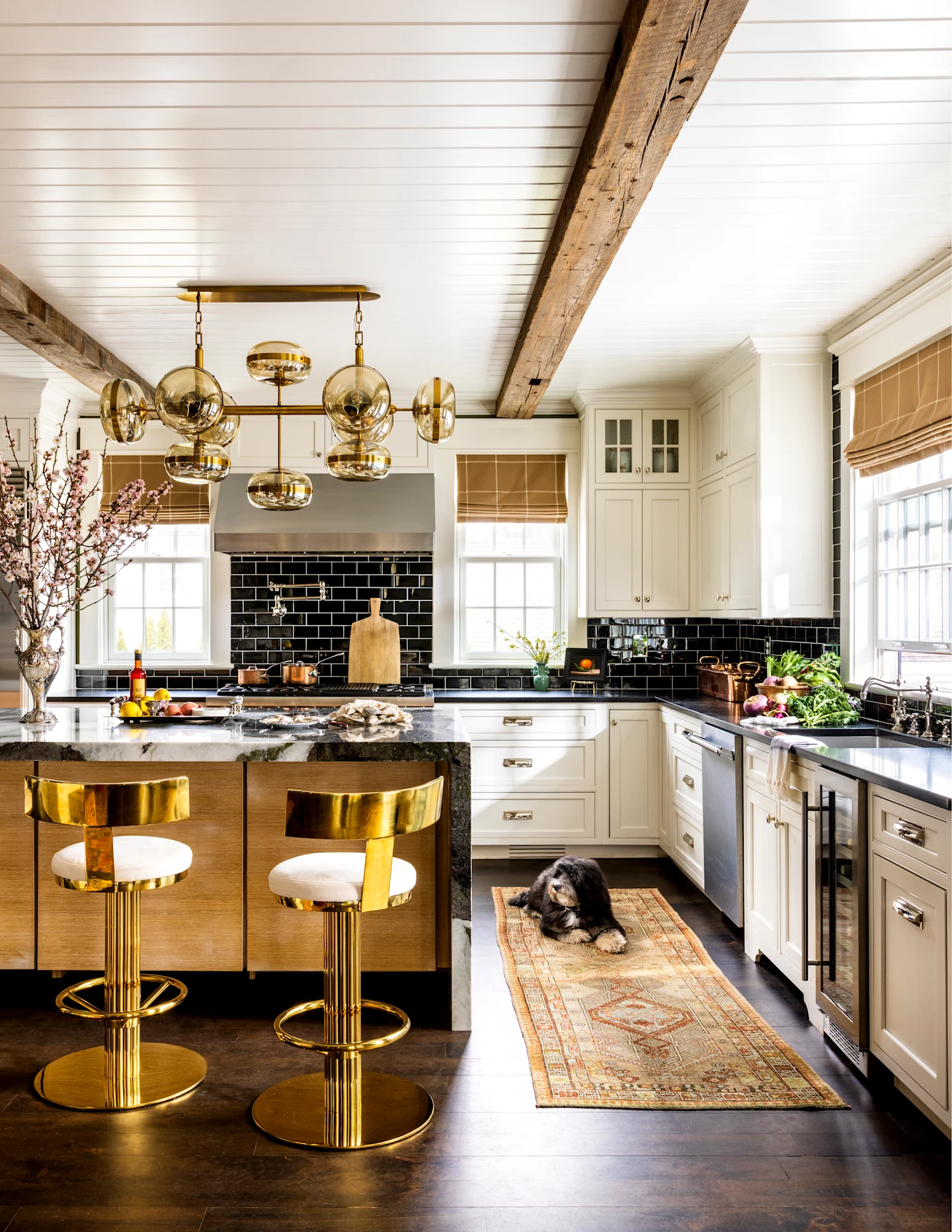
Kitchen With A Kick

Corey Damen Jenkins
Interior Designer
Corey Damen Jenkins is the principal and chief executive officer of Corey Damen Jenkins & Associates, an internationally acclaimed interior design and architecture firm based in New York City. Corey brings a bold, polished glamour to his spaces, layering rich materials, statement lighting, and opulent textures for a fearless twist on traditional.
Corey Damen Jenkins is the principal and chief executive officer of Corey Damen Jenkins & ...
Warmer color tones soften a kitchen’s atmosphere and temper the space's intensity. In a commercial kitchen, you see cooler, blue-toned lighting to keep everyone sharp and hyper-focused on production, speed, and efficiency. But at home, warm tones keep the energy relaxed and inviting, setting the stage for stress-free cooking and gathering.
Durability, porosity, ease of cleaning, and flammability (especially for fabrics on stools and chairs) are all crucial factors to keep top of mind. You also want finishes backed by good warranties and brands that both align with your design vision and offer reliable service. A beautiful finish isn’t truly beautiful if it can’t withstand real-life wear and tear.
I often default to white, like Benjamin Moore Vapor. It reflects light beautifully and subconsciously signals cleanliness—something we want in a kitchen. Employing vibrant, jewel-toned colors, such as Benjamin Moore's Essex Green or Georgian Green, is another way to make a joyful, powerful statement in a kitchen. There are wonderfully bold choices now in appliances, backsplash and counter-top materials, plumbing and hardware, and flooring.
First, make sure any rug has a strong flammability rating—safety always comes first. Look for durable materials or pre-treated options to resist stains from inevitable spills. Runners are a favorite of mine; they add visual interest and a touch of geometric energy underfoot.
Solid black—as a hue—will always feel bold and dramatic, and it requires thoughtful commitment. It’s not for the faint of heart. That said, stone or quartz materials with colorful veining in them or soft matte finishes can offer wonderful alternatives with these motifs.
There are incredible, eco-friendly manufactured options in the marketplace—like quartz, for example—that will stand the test of time with great durability. Choose materials that are less porous and more forgiving with daily wear and tear.
Typically, we start by honing in on an overall design style and general color palette first—those ingredients are crucial because they help establish the theme we are looking to capture. It’s like writing a recipe for a delicious dish. From there, we organically mix each of the room’s individual components until we find the right balance, restraint, and “wow” factor.
Interview by Kerstin Czarra