For me, coziness comes from texture. I love layering materials—rich woods, mirrored accents, ceramic surfaces—anything that brings depth and softness. When textures overlap, a room instantly feels inviting and elevated.
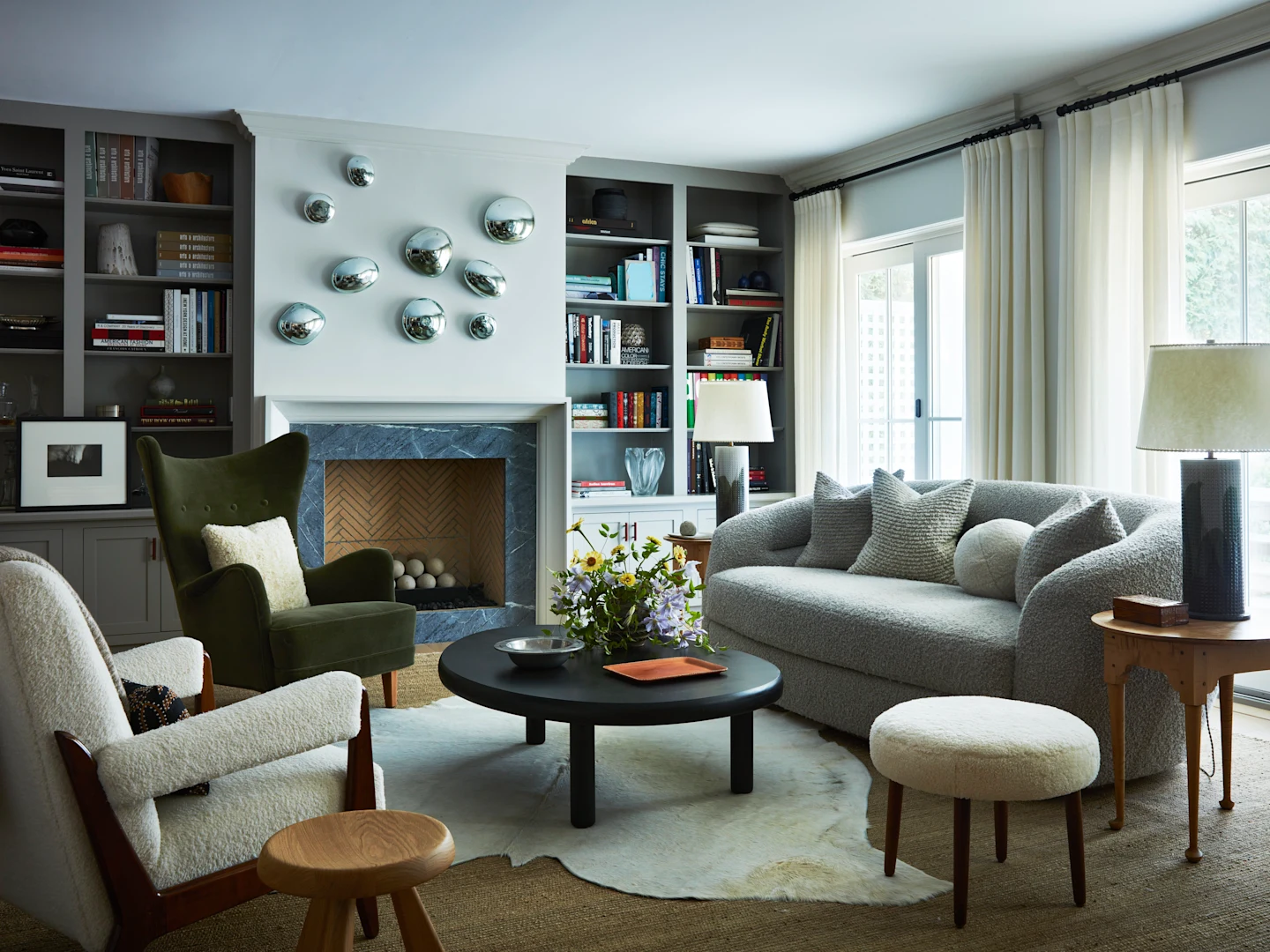
Analisse Taft: Textured Sitting Room

Analisse Taft
Interior Designer
As the co-founder of Sag Harbor design resource and interiors firm the 1818 Collective, Analisse Taft is an industry tastemaker with an eye for detail. She envisions streamlined spaces layered with sumptuous fabrics in warm earth tones and striking vintage finds.
As the co-founder of Sag Harbor design resource and interiors firm the 1818 Collective, An...
Definitely. I stick to classics but tailor them to the setting. In the country, I love Benjamin Moore’s Athena; at the beach, I reach for Silver Satin; and in the city, Edgecomb Gray is the perfect neutral. Each one carries a mood.
I always treat millwork as its own moment. Walls, ceilings, and trim usually stay white, but the millwork gets a saturated high-gloss color—often a deep green. It gives the room a sculptural focal point, almost like a built-in piece of furniture.
The palette is the anchor. As long as the colors harmonize, you can be adventurous with texture. In this room alone, there’s velvet, mohair, shearling, and a couple types of bouclé. It all works because the tones speak the same language.
I love sheers—especially cashmere sheers. They filter the light in a soft, flattering way and bring that subtle elegance you can’t quite describe but immediately feel.
I tend to go with hardwood flooring—whether it’s plank, herringbone, or parquet— because it adds warmth and gives you a strong architectural direction. Many people avoid hardwood in kitchens and baths, but I don’t think that’s necessary. Just order a bit extra for the future. For bathrooms, I also love tumbled marble or ceramic tile, and brick always feels right in mudrooms or foyers.
I’ll often bring in texture with a sisal or seagrass rug that covers the majority of the room, and then layer it with a softer, smaller rug—such as a custom silk, a shearling, a hide, or something vintage—to delineate an intimate seating area.
I always come back to marble paired with a plaster or wood mantel. It feels timeless. Just keep fire codes in mind—they dictate the surround width and whether a hearth is required.
Warm wood accents—like burlwood or a beautiful oak piece—make an immediate difference. Even swapping in a custom parchment lampshade can shift the entire vibe.
Interview by Alyssa Bird