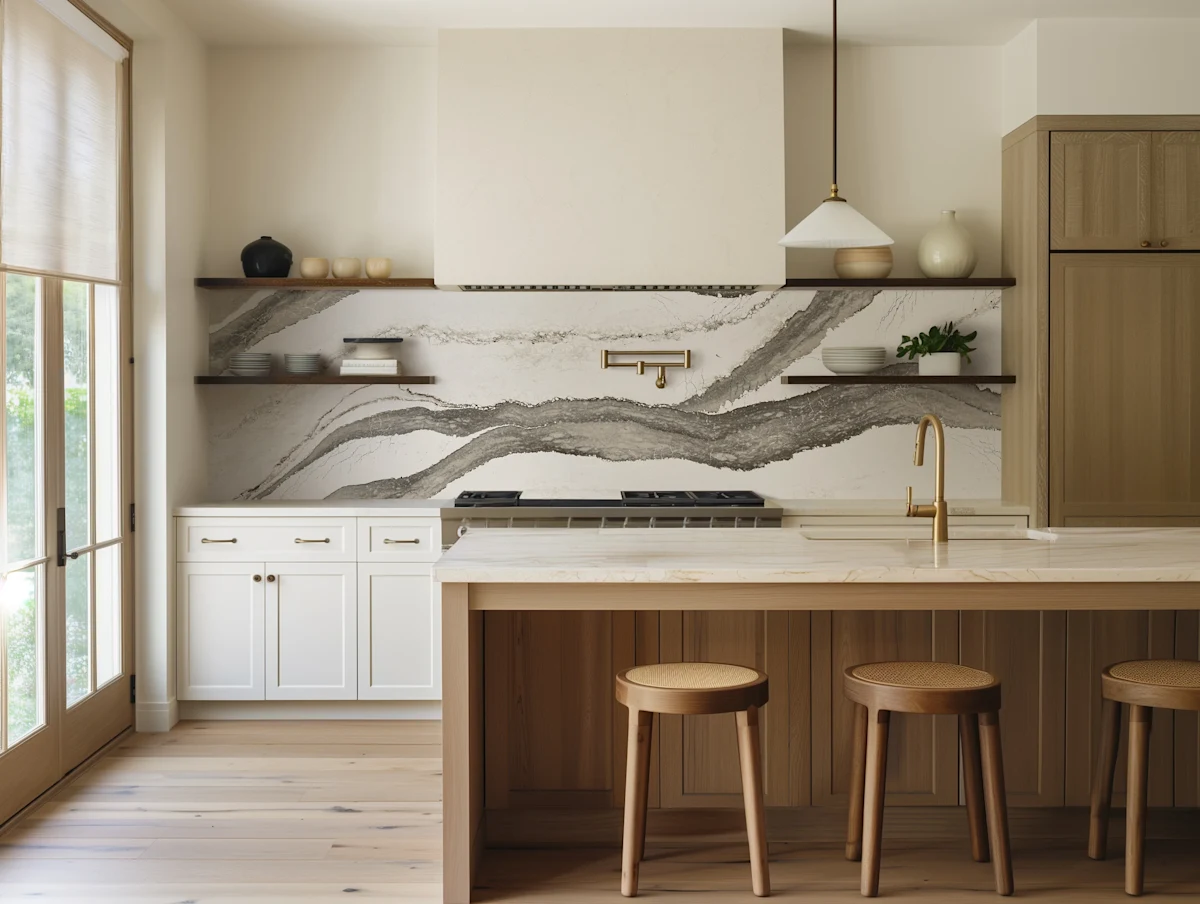
That countertop you keep coming back to? There’s a reason. Whether it’s the drama of marble veining, the clean confidence of quartz, or the under-the-radar luxury of quartzite, your instinct is already pointing somewhere. You just need the information to back it up.
Here’s what actually separates these three materials: the lived-in reality of how they perform, age, and feel in a real kitchen. By the end, you’ll know exactly which one is yours, and you can order the samples to prove it.
Let’s break it down.
What You’re Actually Comparing
Before we get into the details, a quick orientation because these three materials are more different than they look on a mood board.
Marble is a natural stone that forms when limestone is subjected to intense heat and pressure over millions of years. Those gorgeous veins? Mineral deposits that got swept along for the ride. Every slab is one-of-a-kind, which is part of its appeal and part of its character.
Quartz (sometimes called engineered stone) is a man-made material, roughly 90–95% ground quartz crystals bound together with resin and pigment. It’s manufactured to be consistent, durable, and low-maintenance. What it gives up in natural variation, it makes up for in predictability.
Quartzite is the one that confuses everyone. It’s a natural stone, formed when sandstone is metamorphosed under intense heat, and it has nothing to do with engineered quartz beyond a similar-sounding name. It tends to look more like marble than like quartz, but it behaves quite differently.
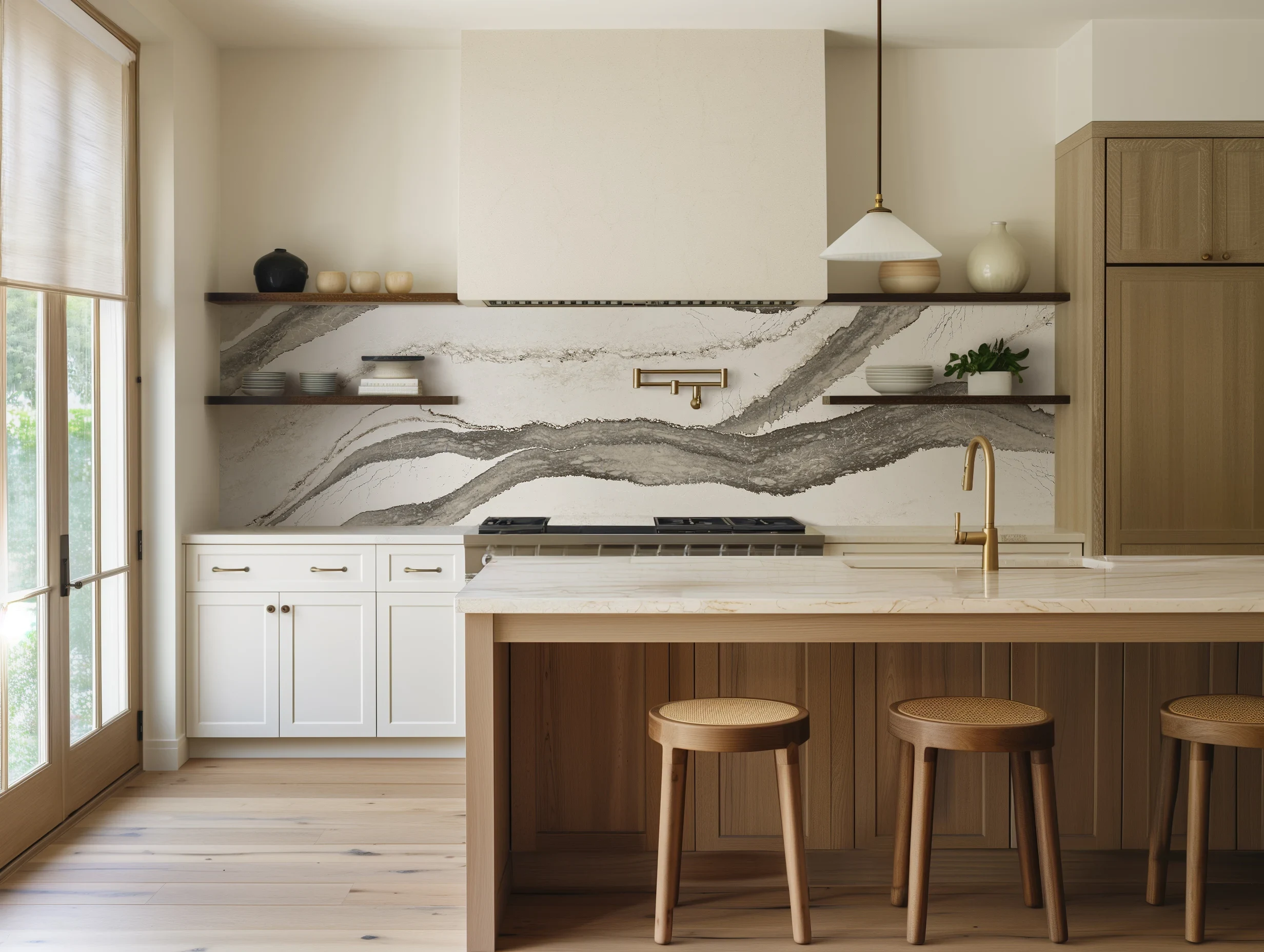
How They Hold Up in Real Life
This is where the rubber, or the red wine, meets the road.
Marble
Marble is porous and relatively soft for a stone, which means it benefits from attentive care. Etching is that dull, slightly hazy mark left by acidic substances - lemon juice, vinegar, wine, even some cleaning products. It’s a chemical reaction with the calcite in the stone, not a surface scratch, and it’s worth knowing about going in.
Pro: Some homeowners love the way marble ages. Patina, the gradual softening and weathering of the surface, is considered part of its character, especially in European kitchens where marble has been used for centuries.
Con: Spills are best addressed quickly, and even with sealing (which you’ll want to do annually), it rewards a little more mindfulness than other surfaces.
Bottom Line: Marble is a beautiful choice for lower-traffic surfaces: a baking station, a butler’s pantry, a bathroom vanity, or for someone who genuinely appreciates a surface that tells the story of a well-used kitchen over time.
Quartz
Engineered quartz is non-porous, which means it doesn’t need sealing and resists staining extremely well. Spills sit on the surface rather than soaking in. It’s also highly resistant to scratches and chips under normal kitchen use.
Pro: Consistent performance and consistent looks. If you want the same slab repeated across a large island and perimeter counters, quartz delivers where natural stone can’t. It’s also the easiest to maintain…soap and water, done.
Con: Quartz prefers to stay away from prolonged direct heat, so trivets near the stove are a smart habit. It’s also best kept indoors - UV exposure over time can affect the color and material.
Bottom Line: Quartz is the workhorse. If your kitchen sees daily chaos like school lunches, meal prep, the occasional forgotten pot, it’s the most forgiving choice.
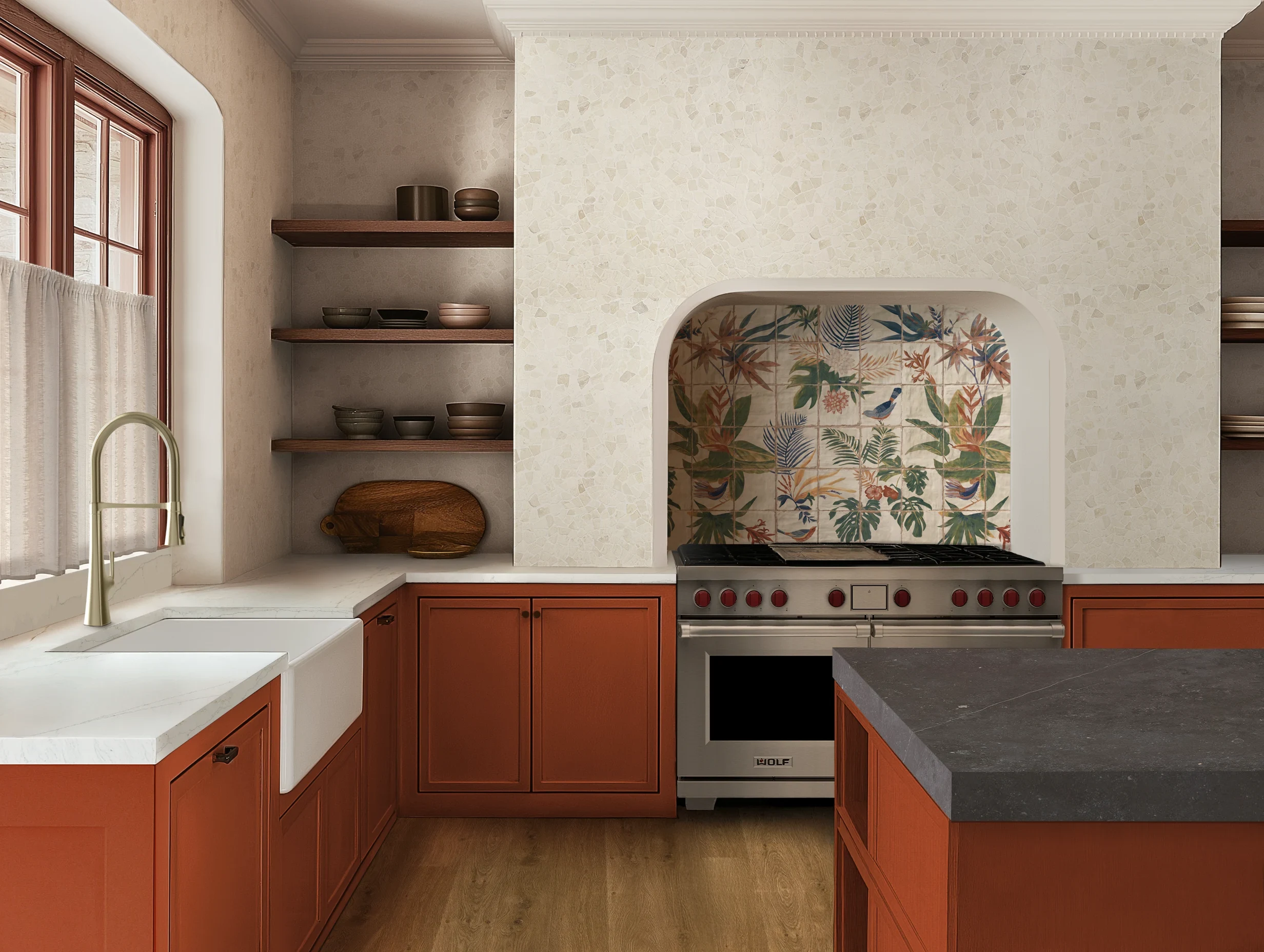
Quartzite
Quartzite is harder than marble and, depending on the specific stone, can be harder than granite. It’s also naturally porous, so sealing is required, but because it lacks the calcite that makes marble more reactive to acids, it handles spills with a bit more ease.
Pro: You get the visual drama of marble with meaningfully better durability. Many quartzite slabs are stunning, they can mimic the look of high-contrast marble or deliver something entirely unique.
Con: Quality varies across the category, so it’s worth asking your supplier for a scratch and acid test on the specific slab you’re considering before you commit.
Bottom Line: Quartzite is worth considering if you love natural stone and want something with a little more resilience, just do your homework on the specific slab.
What to Factor Into Your Budget
Pricing for all three materials varies more than you’d think, by region, by supplier, by slab rarity, and by how complex your layout is. Rather than anchoring to numbers that may not reflect your market, here are the variables actually worth asking about when you get quotes.
Edge profile: A simple eased edge costs less to fabricate than an ogee or waterfall edge. If budget is a consideration, the edge is an easy place to find savings without compromising the surface itself.
Thickness: Most residential countertops come in 2cm or 3cm slabs. The thicker option feels more substantial and is structurally stronger for overhangs, but it adds to the cost.
Seaming: The more L-turns, islands, and cutouts your kitchen has, the more seams the fabricator needs to create and seams add labor cost regardless of material.
Rarity of the slab: Within each material category, the range is enormous. Entry-level Carrara marble and a rare book-matched Calacatta are both “marble,” but they’re not in the same conversation price-wise. Same goes for quartz and quartzite.
Bottom Line: Get at least two or three quotes from local fabricators, and make sure you’re comparing the same thickness, edge, and finish. The material cost is only part of the picture.
How to Decide: Four Questions Worth Asking Yourself
Rather than telling you which to choose, try answering these.
1. How do you actually use your kitchen? Daily cooking with acidic ingredients, young kids, or a busy household? Quartz is your friend. A lighter-use kitchen where you’ll be more intentional about care? Marble or quartzite become very appealing.
2. What does the rest of your space look like? Quartz’s consistency is an asset in contemporary, streamlined spaces. The natural variation of marble and quartzite tends to work beautifully in more layered, collected interiors.
3. Does patina bother you or charm you? This is genuinely personal. Some people love the idea of a surface that softens gracefully over time; others prefer something that looks exactly the same on day one as it does on year ten. Both are completely valid.
4. Are you renovating to sell or to stay? If you’re renovating for resale in the near term, quartz is often the safer betas it photographs well and appeals to a wide range of buyers. If this is your forever kitchen, let your taste lead.
Frequently Asked Questions
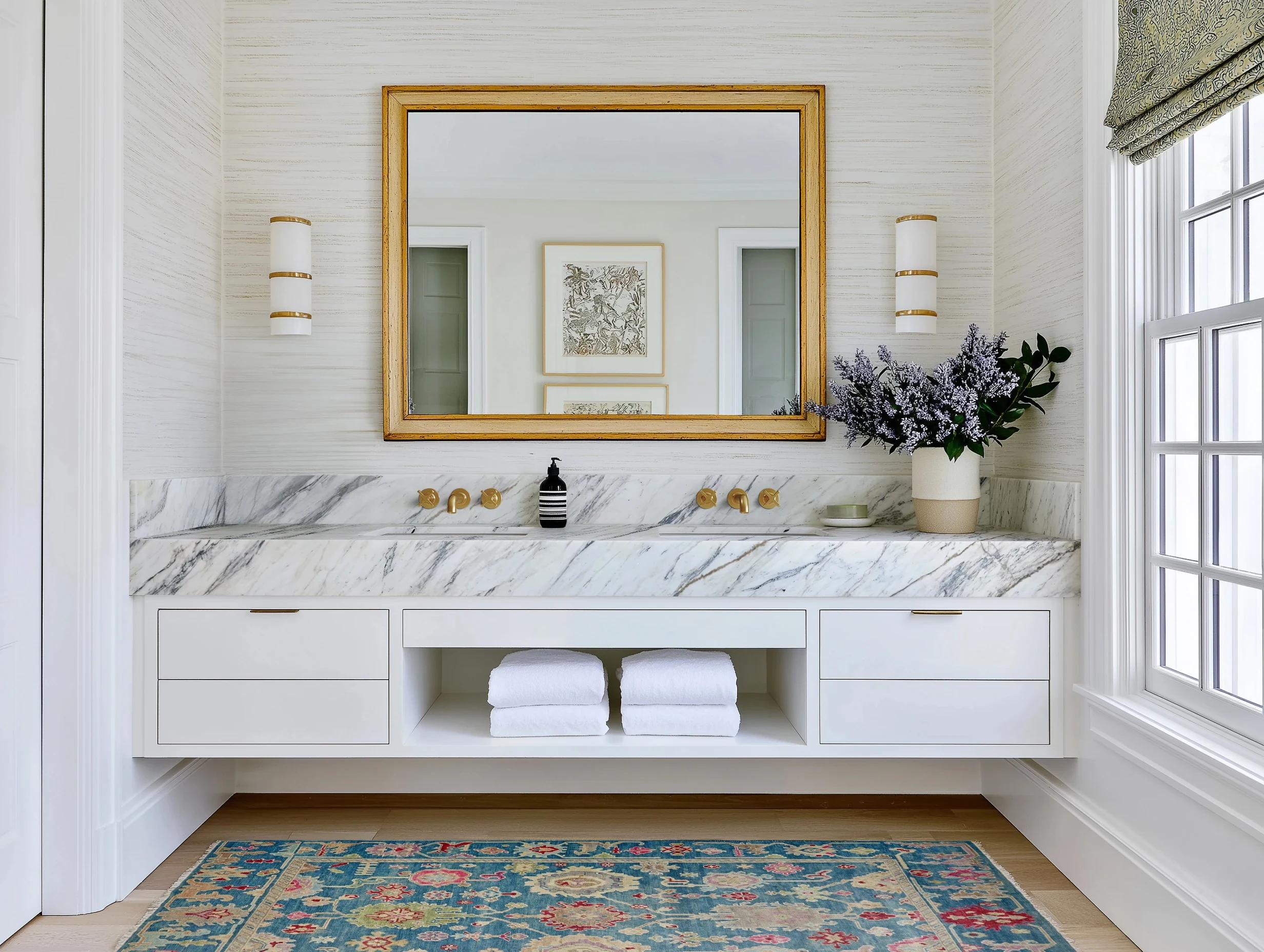
Can I use marble in a bathroom instead of a kitchen? Yes, and it’s a wonderful choice there. Bathrooms see less acidity and heat than kitchens, so marble is easier to care for in that setting. It’s one of the most elegant options for a vanity or shower surround.
Is quartzite the same as quartz? No. Quartzite is a natural metamorphic rock; quartz (engineered stone) is a manufactured product. They share a root word, but that’s where the similarity ends.
How often does marble need to be sealed? Generally once a year for kitchen countertops, though some sealers last longer. A simple water test tells you when it’s time: if water soaks in rather than beading up, it’s time to reseal.
Will quartz yellow over time? Some lighter quartz colors can show changes with prolonged UV exposure, particularly near sunny windows. If your kitchen gets a lot of direct sunlight, ask your supplier specifically about UV stability for the color you’re considering.
What’s the most low-maintenance option for a busy family kitchen? Quartz, for everyday ease and durability. If you love natural stone and enjoy a bit more hands-on care, a dense, well-tested quartzite is a beautiful second option.
Sampling Natural Stone at DesignShop
Before you commit to any natural stone, sampling is everything. DesignShop offers a range of sampling options - some materials are available as traditional physical samples, some as peel-and-stick, and some as both options. That means you can see exactly how a material looks in your space, in your actual light, before you ever set foot in a slab yard or showroom. It’s the smartest first step before making one of the biggest material decisions in your home.