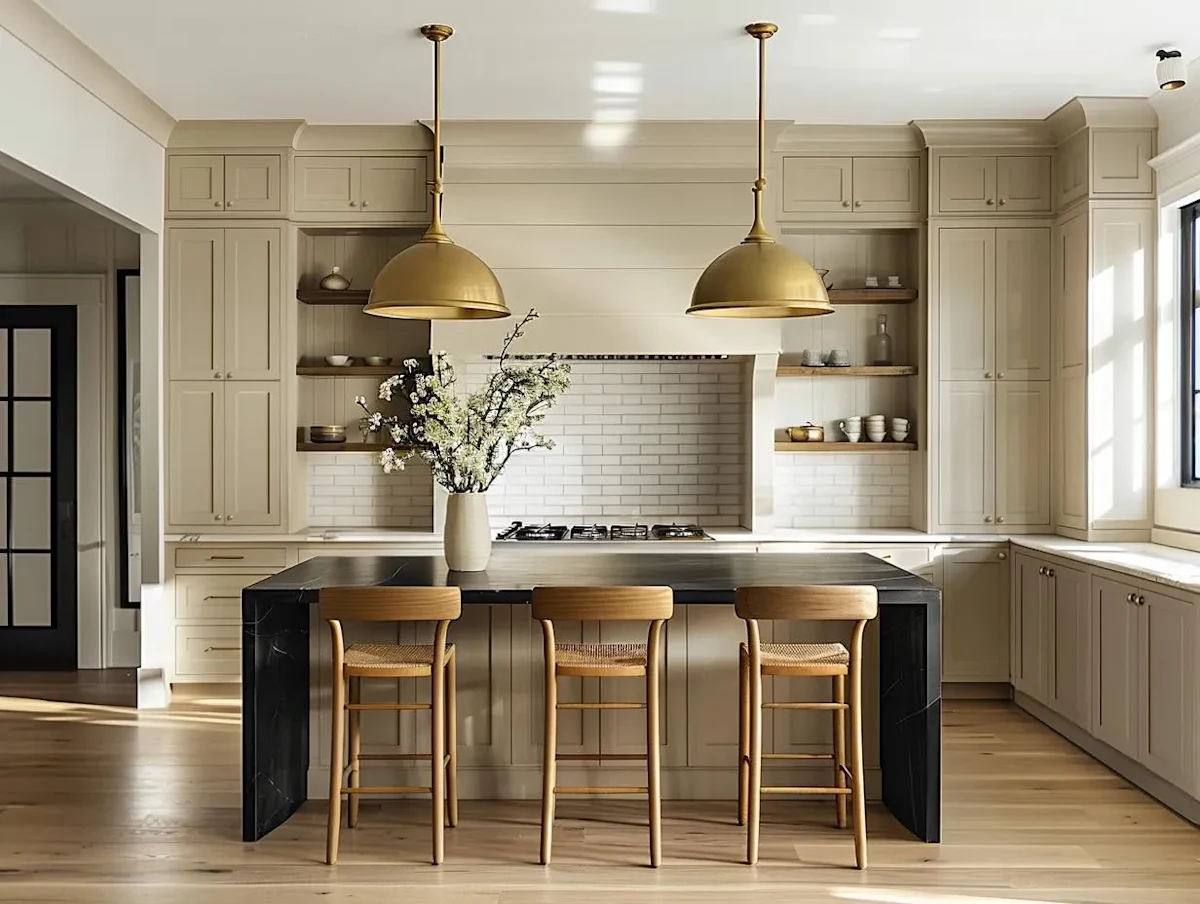
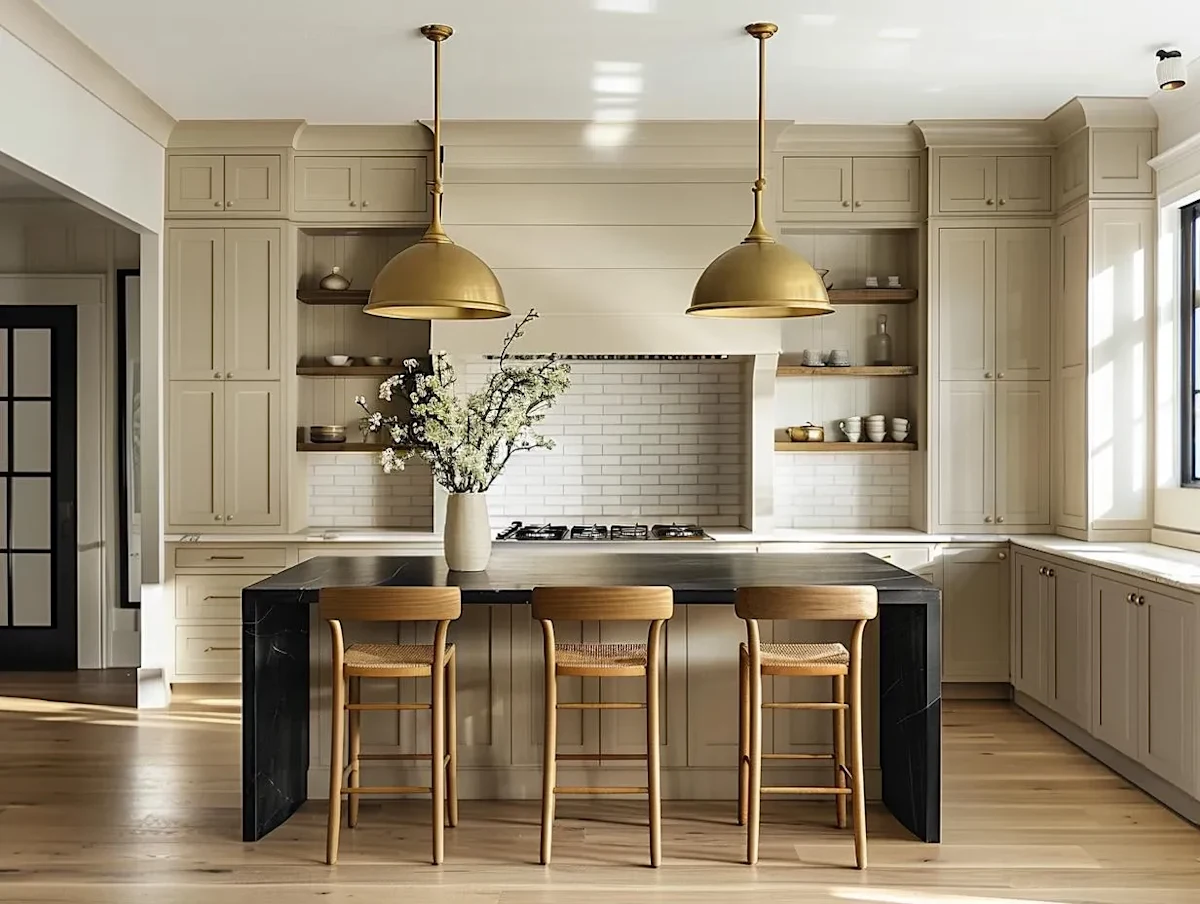
All of the different types of countertops can be confusing, but choosing one for your kitchen is arguably the most important decision you might make in a remodel or new build. Countertops are one of the largest, most hardworking surfaces in a kitchen — they see everything from drink spills and cooking mishaps to party prep and messy art projects. That’s why it’s so important to think through what types of kitchen countertops might suit your lifestyle best while still giving you that dream kitchen look.
To make the best decision for your space, it’s important to do your research into the different counter surface types. Once you know the pros and cons of some of the most popular materials, you’ll be able to do a thorough countertop material comparison. That way, you can choose with confidence and get to the fun part of kitchen designing — sampling countertop colorways and styles on DesignShop to find your ideal match.
Why Countertop Choice Matters for Your Kitchen
Counters are where you prepare and often serve meals, and they can even be where you eat them, too. Because they’re a functional surface that gets so much use and has to stand up to elements like water and heat, it’s best to match your countertop choice to the level of cleaning, maintenance, and care you’re comfortable with. That way, your counters are more likely to support your unique use habits and ultimately live up to your expectations — and potentially last a lifetime.
Impact on Design
Functionality aside, countertops take up a lot of surface area in your kitchen, as they complement the various appliances, cabinets, and fixtures in the space. They’re noticeable from the moment you walk into the room, and they can set the tone for the style of kitchen you’re looking to create, whether you want a classic, all-white kitchen or a super-slick contemporary space.
Durability Factors
When it comes to exposure to water, heat, and even sharp knives (hello, veggie chopping!), certain types of countertops are more durable than others. You’ll want to look into just how resistant a given material is to these elements and what, if anything, can be done to shore up the longevity of a countertop and its finish.
Maintenance Requirements
Speaking of longevity, you'll also want to acquaint yourself with just how much cleaning and sealing you’ll have to do with any given countertop type. Staining plays a role here, too; some kitchen countertop materials are far more penetrable, meaning they’re more susceptible to stains and need immediate attention when spills and messes occur. Certain countertops will also need sealing beyond what comes standard as a factory finish.
Countertop Material Comparison: Key Differences
Countertop materials run the gamut, and each surface type offers its own set of unique characteristics. As you hone in on your perfect kitchen countertop, keep these key areas in mind for comparison. You’ll likely have to make some kind of a compromise, so it’s all about weighing the pros and cons to figure out what’s most important to you.
Look and Feel
Yes, you can match your countertops to your personal style! You’ll want to consider the different types of countertop appearances, from the colors they’re offered in to the look and structure of the material itself. Texture comes into play here somewhat, too. Certain materials will be better suited to a maximalist or minimalist vibe depending on how visually busy they are as well as how they’re finished (matte versus glossy, etc.).
Strength and Durability
You’ll likely want to do your deepest dive here, as some materials can stand up to moisture, heat, staining, and chipping/denting better than others. The way you clean and maintain your countertops come into play here as well.
Cost and Budget
Not all countertop materials are created equally when it comes to cost either. Thanks to their infinite uniqueness, natural stones will typically be pricier than anything engineered — but sometimes not by much. Laminate is typically among the most budget-friendly options available.
Now that you know what factors to consider when choosing a countertop, it’s time to weigh the individual pros and cons of three popular types of countertop materials, all of which are available at DesignShop for sampling in your own home.
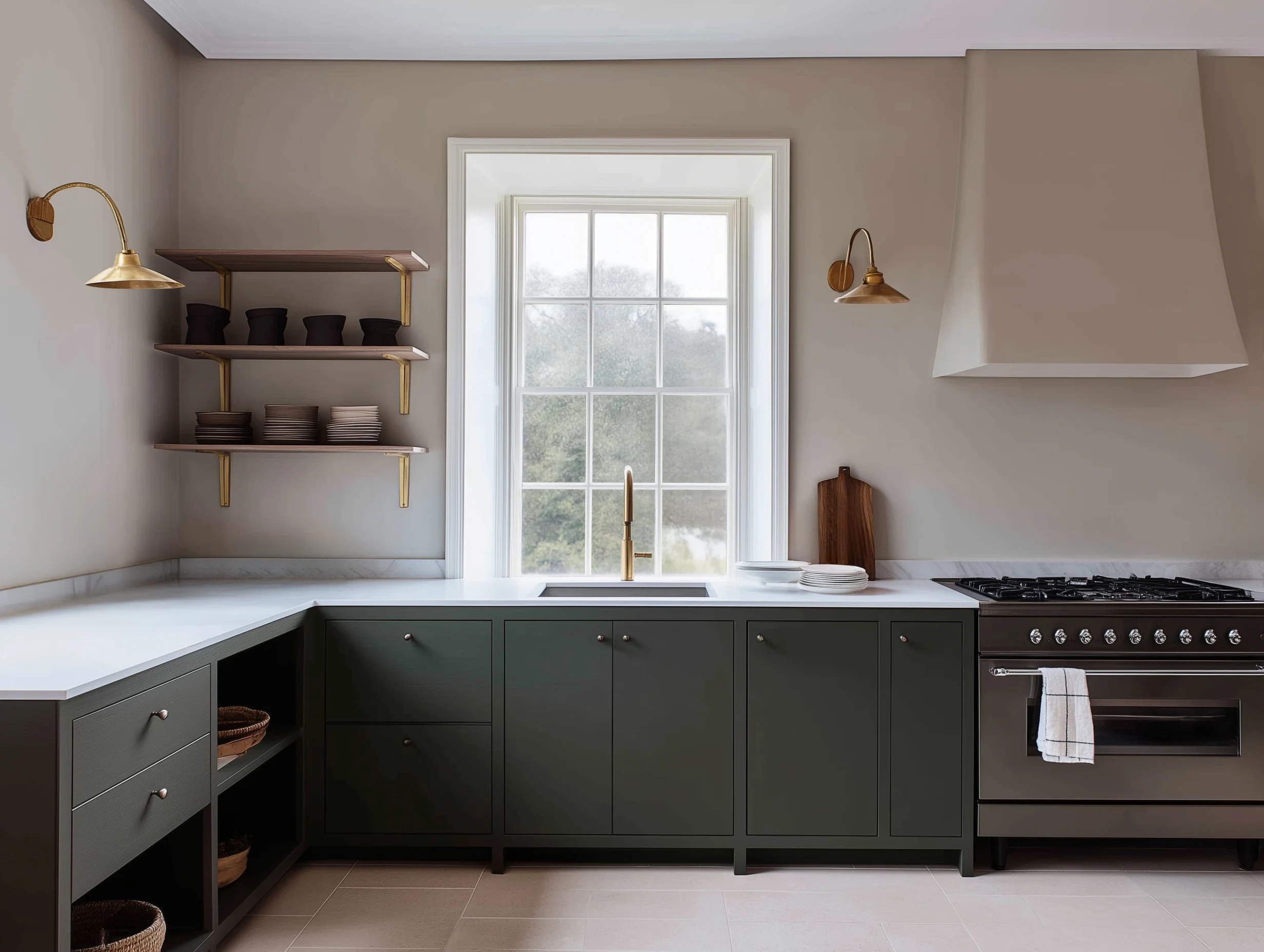
Pros and Cons of Natural Stone Countertops
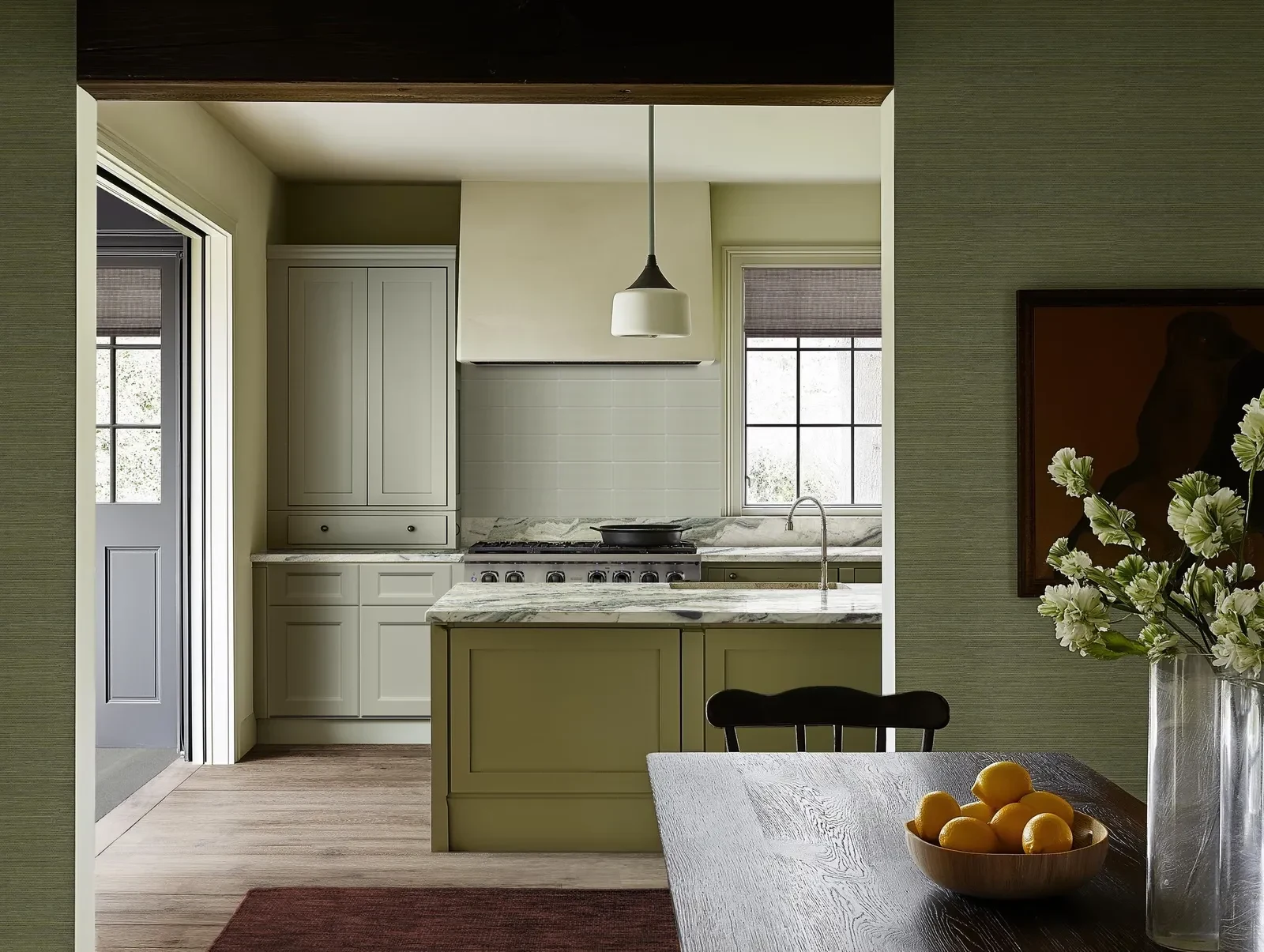
Marble, soapstone, granite, quartzite, travertine — these materials are among the most popular natural stones used for kitchen countertops. That’s because you can find a ton of range in terms of these surfaces’ appearances and vibes. Gorgeous aesthetics aside, natural stone isn’t always the most durable choice, depending on what variety you choose. Here’s how this material of family stacks up in terms of pros and cons.
Pro: Natural Stone Is Beautiful and Unique
While marble is an ages-old material that goes with just about anything — especially the classic, gray and white Calacatta variety — dark granites can read as super-contemporary when paired with the right cabinetry and backsplash. Whether you’re a maximalist or minimalist, some variety of natural stone has you covered there, too. Something with prominent veining or mottling can deliver a more is more effect, whereas dark soapstone and creamy beige travertine offer more uniformity and a little less movement for a subtle, subdued look.
Pro: Natural Stone Is Timeless and Great for Resale
Natural stone countertops are true style chameleons, and most varieties never really go out of style. This is particularly true of marble, but even granite countertops get touted in real estate listings these days. People know the inherent value of and understand the style cache of natural stone. They’re also aware that natural stone varieties are fairly durable and heat-resistant, which can make them very long-lasting in a kitchen with proper care.
Con: Natural Stone Can Stain Easily and Is Somewhat High-Maintenance
Though soapstone is on the stronger, non-porous end of the spectrum, it’s more of the exception — not the rule — when it comes to natural stone. Marble and granite must be sealed (and resealed regularly, for food safety and general upkeep). You have to watch what kind of cleaners you use on most natural stones because most are porous. Along those same lines, lighter natural stones can stain easily, and marble, in particular, is prone to chipping and denting, since it’s on the softer side.
Con: Natural Stone Is Very Expensive
Natural stone is a finite resource, and its pricing reflects that. In general, you can expect to pay about $50 to $200 per square foot, installed, on average. Rarer stones and slabs with more dramatic veining will likely cost more.
Pros and Cons of Engineered Countertops
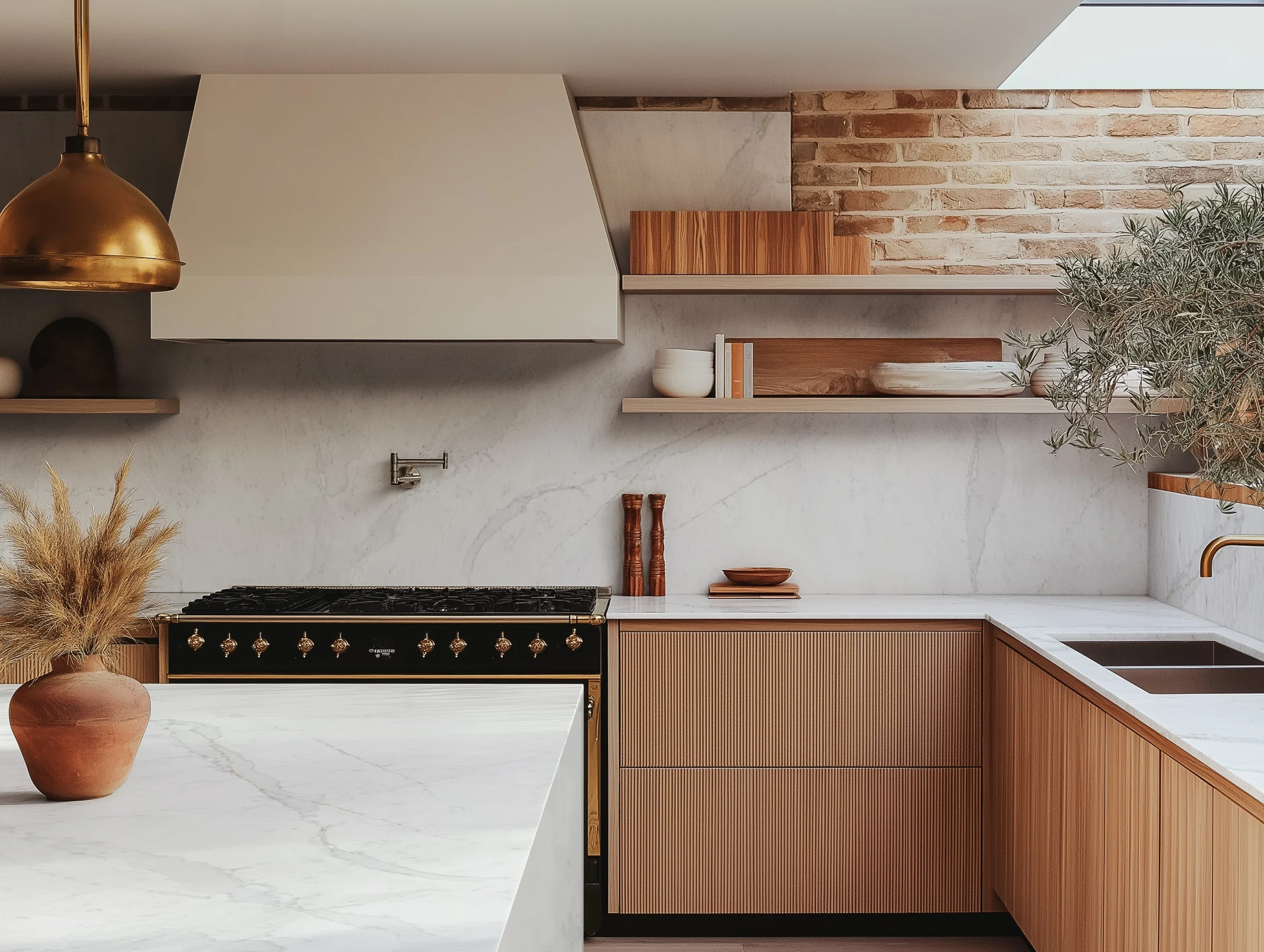
When you hear the term “engineered countertops,” this typically refers to a composite material that consists of resins and pigments bound with natural stone. Often, the most prevalent stone in the mix is quartz, so you may hear this category of countertops just called “quartz.” Like natural stone, engineered quartz also has both pros and cons.
Pro: Engineered Countertops Are Durable and Low-Maintenance
A lot of people choose engineered stone over natural stone for its durability; adding resin to the mix literally makes this material non-porous. This means quartz doesn’t have to be sealed, it’s resistant to staining, and it’s also easy to clean. The durability factor also means quartz is less likely to chip, scratch, and show signs of wear and tear over the years.
Pro: Engineered Countertops Offer Lots of Aesthetic Variety
The sky's the limit as far as what you can find aesthetically that’s made of quartz, including hundreds of different colorways and patterns. You can find quartz options that even mimic the look of natural stone! On the other hand, if you really want a simple, streamlined look in your kitchen, quartz may be the way to go. Because it’s a man-made product, it can be made to look totally uniform and very visually quiet.
Con: Engineered Countertops Are Less Heat-Resistant
Though engineered stone offers some tolerance to heat, very high temperatures can warp the resins in this material. If you choose quartz countertops, you’ll just have to be more careful with hot pots, pans, and dishes because they can damage the surface.
Con: They’re Often As Pricey As Natural Stone
While quartz offers a lot of functionality and comes in so many different stylish patterns, it’s pretty much on par with natural stone cost-wise, despite being man-made. The price per square foot here is, on average, about $50 to $150, installed.

Pros and Cons of Laminate Countertops
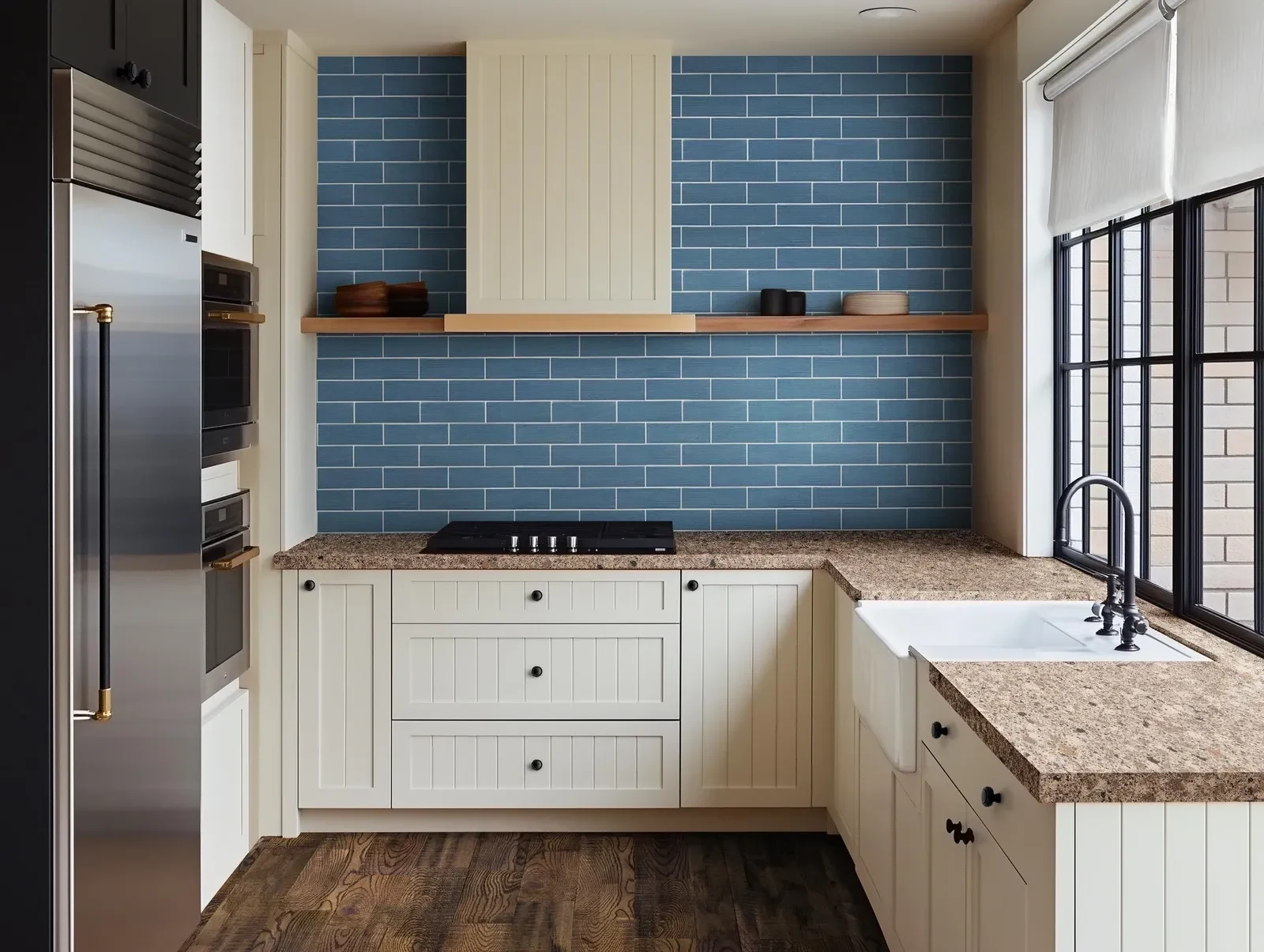
Maybe you remember laminate countertops from growing up in the ‘50s and ‘60s, or perhaps your first experience with them was at your grandparents’ house or eating at the local diner. Whatever the case, laminate, which is made of plywood or particle board covered with a thin sheet of plastic resin, has come a long way over the years. With the advancement of printing technologies, this material can now convincingly imitate the look of marble, granite, quartz, and more. That said, laminate, too, offers its own set of pros and cons.
Pro: Laminate Countertops Are Budget-Friendly
Affordability is one of laminate’s most attractive qualities. This material runs about $20 to $80 per square foot, installed, making it one of the most budget-minded countertop materials available.
Pro: Laminate Countertops Are Stain-Resistant and Easy to Clean
You won’t have to worry about stains and grime with laminate countertops. They’re easy to wipe down and very low-maintenance, requiring no special sealing or fancy cleaning products.
Con: Laminate Countertops Can Scratch Easily and Aren’t Heat-Resistant
Though laminate is a no fuss and fairly durable material, you have to be careful with using knives and any other sharp utensils around it. The same goes for hot pans and plates — laminate can scorch and burn, and it’s also possible to chip, too. A little bit of mindfulness goes a long way with this material, though.
Con: Laminate Countertops Don’t Last as Long as Other Options
Moisture exposure can be an issue with laminate countertops, and over time, it’s possible for your counters to warp and experience something called delamination, which occurs when the laminate separates from its plywood or particle board base. You can’t really fix delamination, and often, the only solution is replacing all of the countertops. All that aside, it’s important to note that laminate will not last quite as long as stone or engineered countertops will.
Frequently Asked Questions About Countertop Materials
Now that you’ve been introduced to three popular countertop materials — and have heard the pros and cons of each, it’s time to weigh your options. If you’re left with just a few more questions, this section of frequently asked questions might help you tie up those loose ends.
What’s the difference between quartz and quartzite?
These two similarly sounding words are not the same thing. “Quartz” typically refers to the man-made mix of quartz, pigments, and resins, aka what’s otherwise known as “engineered stone.” Quartzite is a type of natural stone with a very high quartz crystal content.
Can countertops be customized for my uniquely-shaped kitchen?
Yes, countertops are cut to size and can be shaped to fit during the fabrication process. When it comes to rounding corners and creating curves, laminate and natural stone can be easier to shape, but it’s not impossible to manipulate quartz.
I want to DIY my countertops. What’s the easiest option for that?
While many materials are DIY-friendly, laminate countertops might be the easiest to install, since they’re fairly lightweight compared to natural and engineered stone. Laminate counters are also easy to replace.
How long do countertops last?
The good news is that there’s not a bad pick in the bunch when it comes to these top countertop materials. With proper care, you can expect to get a few decades out of laminate, while natural stone and quartz could last a century!
Ready to start exploring all of these kitchen countertop options? DesignShop has you covered in these three kitchen countertop categories — and you can have samples in hand overnight with the click of a few buttons. Grab a few favorites, and get going on your dream kitchen now.