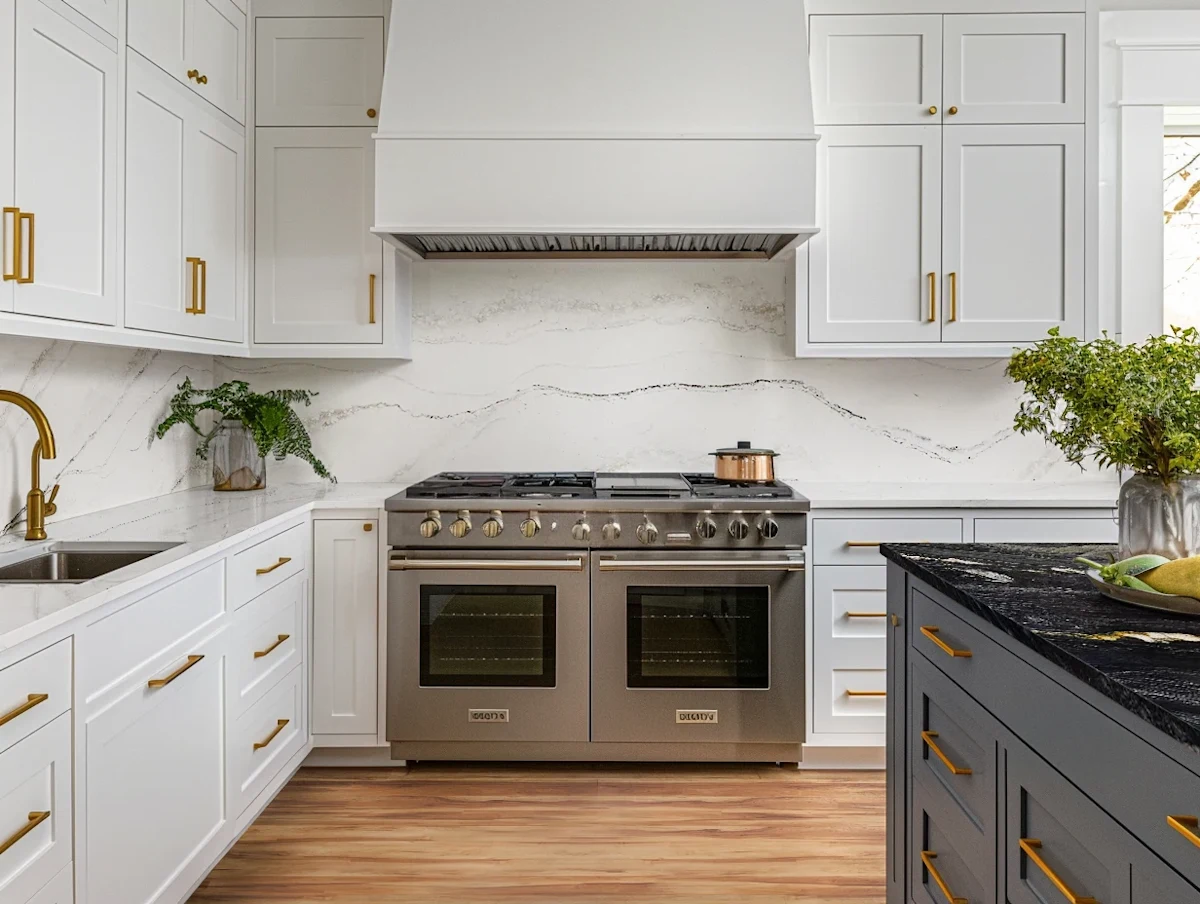
Choosing a new floor might be the most consequential design decision in any renovation. It covers more square footage than anything else in the room, it sets the tone for everything above it, and unlike a pillow or a paint color, it’s not something you swap out on a whim.
The good news is that the three most popular options right now, solid hardwood, engineered wood, and luxury vinyl plank, are all genuinely excellent. The better news is that once you understand how each one performs in real life, the right choice for your space becomes a lot clearer.
Here’s what you actually need to know.
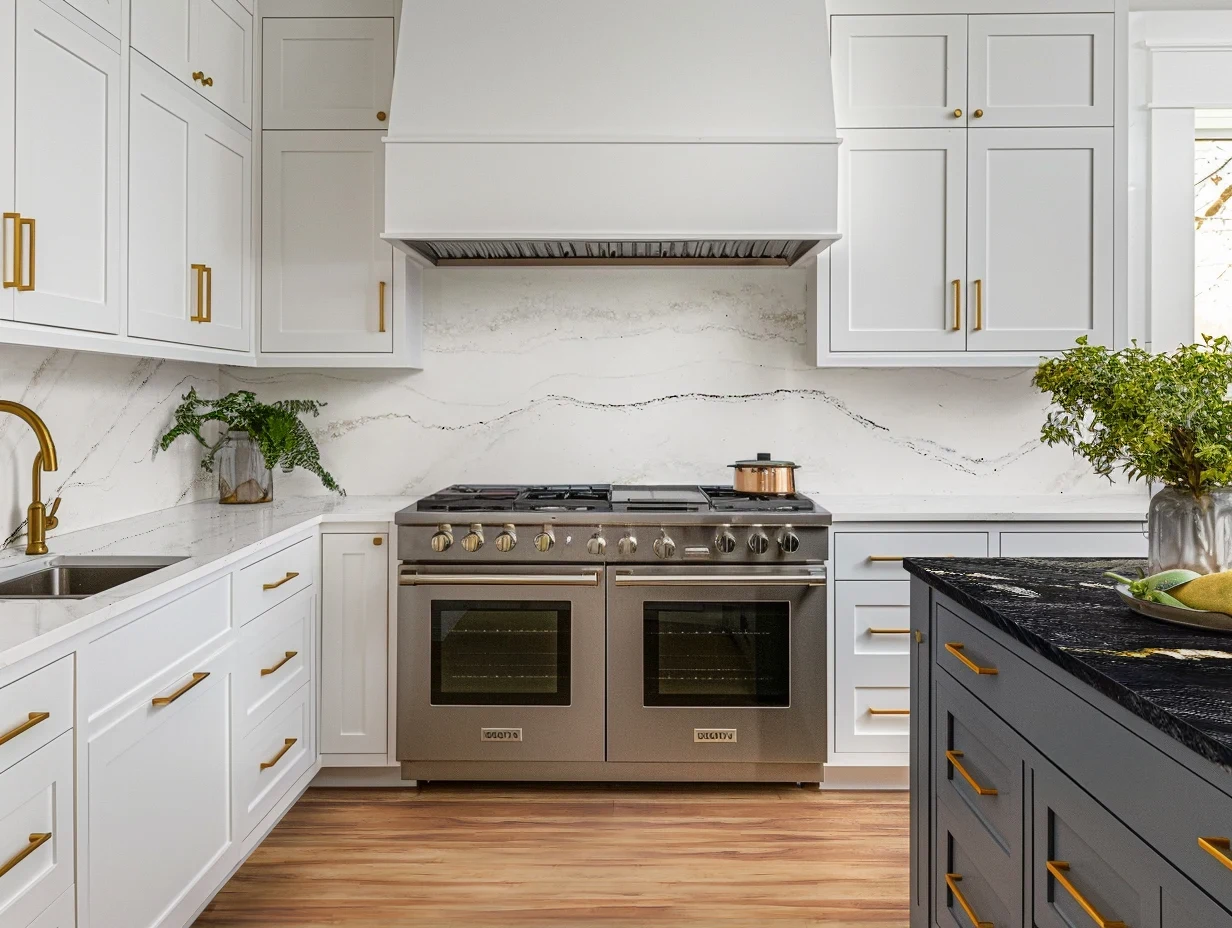
Solid Hardwood: The Original and Still the Gold Standard
There’s a reason solid hardwood has been the aspirational flooring choice for centuries. It’s beautiful, it’s durable, and done right, it can last the lifetime of a home. Solid hardwood is exactly what it sounds like, a plank of wood milled from a single piece of timber, typically three quarters of an inch thick.
Pro: It can be sanded and refinished multiple times over its lifespan, which means scratches, dents, and worn finishes are never permanent. A well-maintained hardwood floor can look brand new decades after installation.
Pro: It adds genuine value to a home. Buyers recognize it, appraisers value it, and it reads as a quality material in a way that’s hard to replicate.
Con: Solid hardwood does not love moisture. It expands and contracts with changes in humidity, which makes it a poor choice for basements, bathrooms, or any space that sees significant temperature swings. It also needs time to acclimate to your home before installation, which adds to the project timeline.
Con: It’s one of the more expensive flooring options, both in material cost and installation, which typically requires nailing or stapling to a wood subfloor.
Bottom Line: Solid hardwood is the right choice if you’re in it for the long game, working on above-grade living spaces, and willing to invest in something that genuinely appreciates with age.
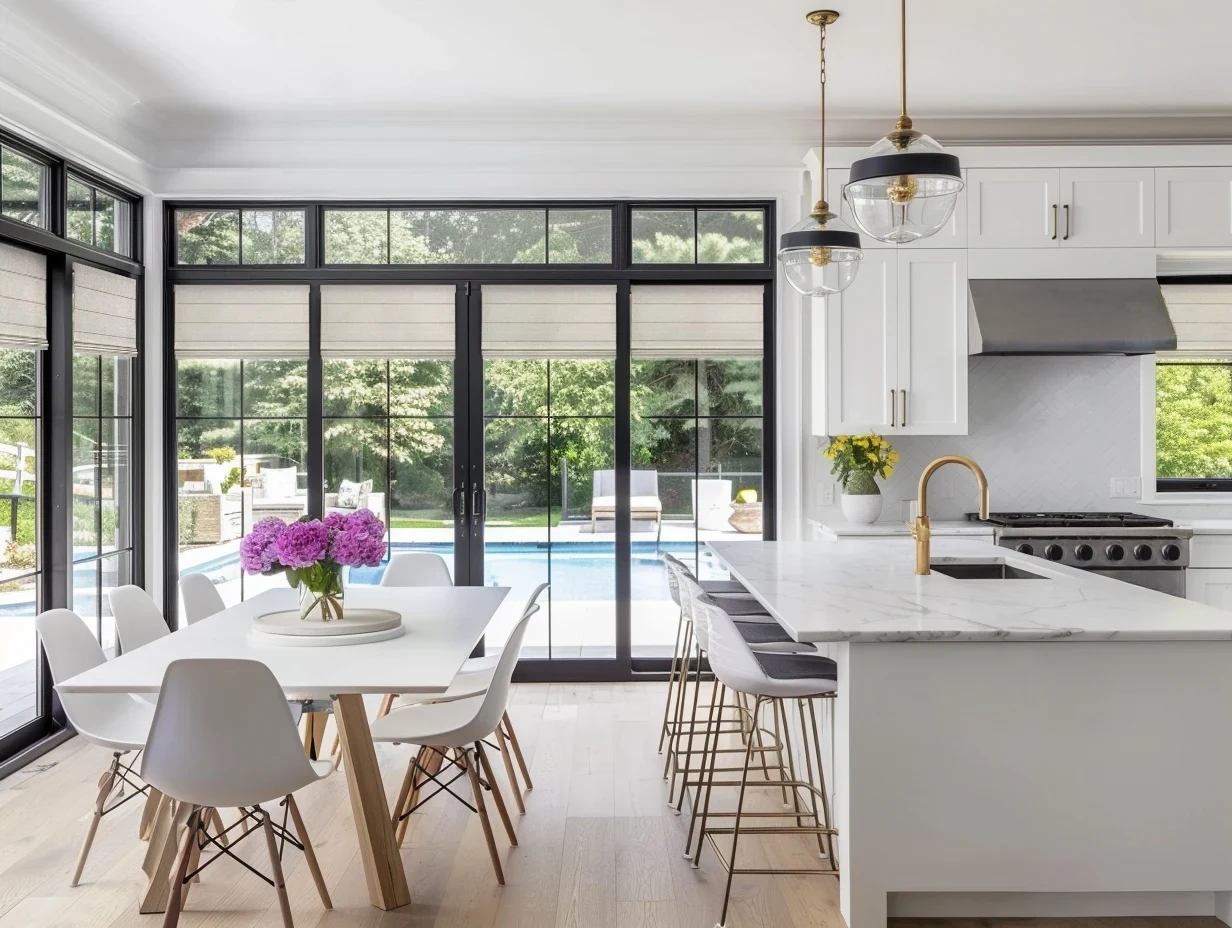
Engineered Wood: The Smarter Solution for More Spaces
Engineered wood looks like hardwood because it is hardwood, at least on the surface. It’s constructed with a real wood veneer on top bonded to multiple layers of plywood or high-density fiberboard underneath. That cross-ply construction is what makes it so much more dimensionally stable than solid wood.
Pro: Because it doesn’t expand and contract the way solid hardwood does, engineered wood can go places solid hardwood can’t. Below grade, over radiant heat systems, in spaces with higher humidity. It opens up a lot of options.
Pro: The top layer is real wood, so it looks identical to solid hardwood. The range of species, stains, and finishes available is just as broad.
Pro: It can typically be refinished at least once or twice depending on the thickness of the veneer, which gives you some of the longevity benefit of solid hardwood.
Con: It can’t be refinished as many times as solid hardwood, so it won’t last quite as long under heavy use. And lower-quality engineered products with thin veneers offer very little refinishing potential at all, so it’s worth investing in a quality product.
Con: It’s generally priced similarly to solid hardwood, so the cost savings aren’t dramatic. You’re paying for versatility and stability, not a bargain.
Bottom Line: Engineered wood is the move when you love the look of hardwood but need a material that can handle more challenging conditions. It’s the most versatile of the three options and performs beautifully in most residential applications.
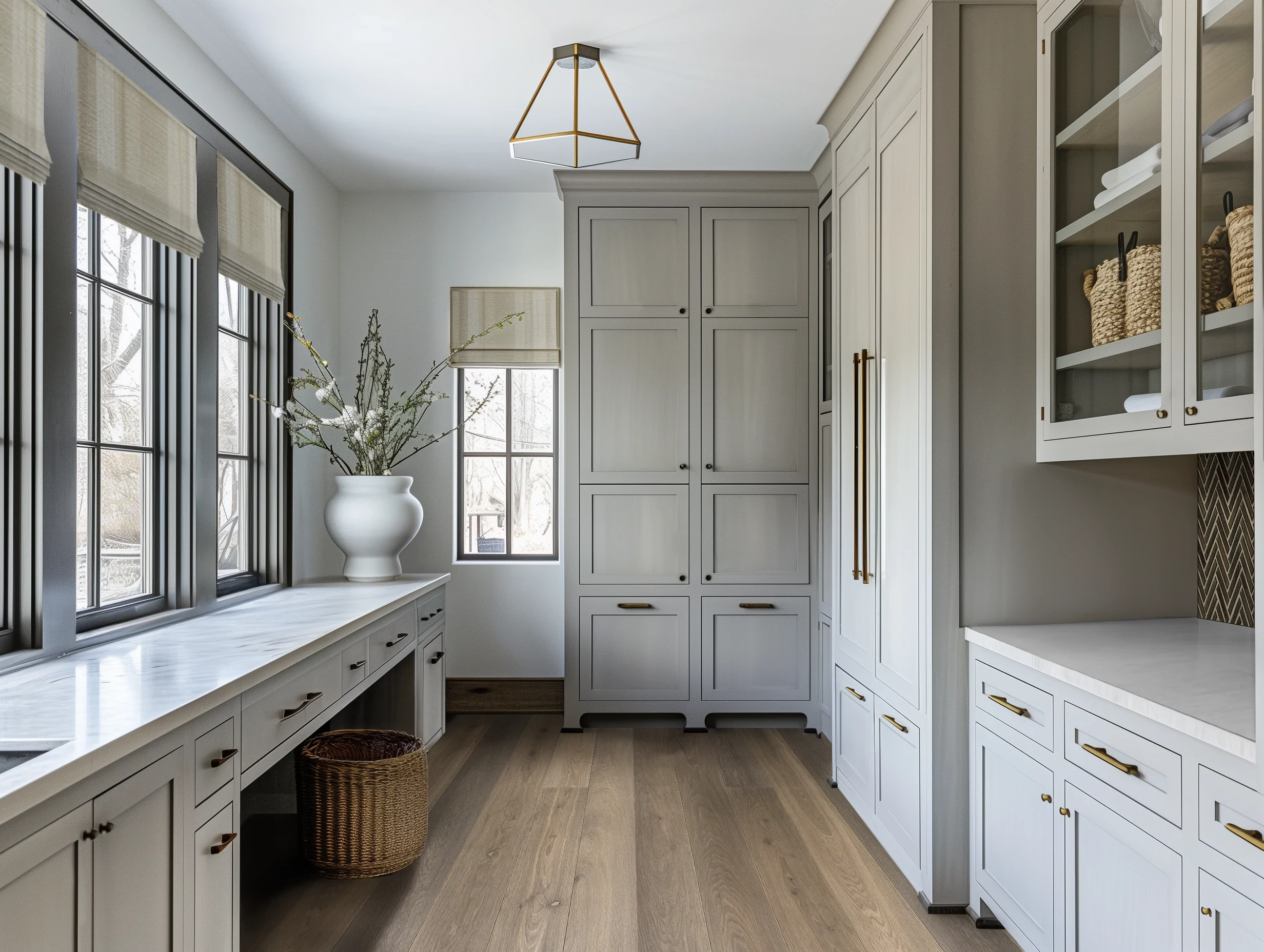
LVP: The Practical Choice That’s Earned Its Place
Luxury vinyl plank has had a remarkable decade. Once dismissed as an obvious substitute, it has evolved into a genuinely impressive flooring category with a loyal following among designers, developers, and homeowners who prioritize performance above all else.
LVP is a fully synthetic product, typically constructed with a rigid core, a photographic layer that mimics wood grain, and a wear layer on top that protects against scratches and stains. It contains no real wood.
Pro: It is completely waterproof. Not water resistant, waterproof. That makes it the only one of these three materials you can install in a bathroom, a laundry room, or a basement without any concern.
Pro: It’s the most durable of the three in terms of day-to-day abuse. Scratches, dents, pet nails, dropped pots, spilled wine. LVP handles all of it with minimal complaint.
Pro: It’s typically the most affordable of the three, and installation is often easier and less expensive as well since many products float over existing subfloors without adhesive or nailing.
Con: It cannot be refinished. Ever. When it’s worn, it’s replaced. High-quality LVP with a thick wear layer will last many years, but it doesn’t have the generational lifespan of hardwood.
Con: It doesn’t add the same value to a home that hardwood does. Most buyers and appraisers recognize the difference, and in a high-end home, LVP in the main living areas can feel like a mismatch.
Con: Despite significant improvements in texture and printing technology, a close look and feel will tell you it’s not wood. For some homeowners that’s a complete non-issue. For others it matters.
Bottom Line: LVP is the right choice when performance is the priority, when moisture is a factor, or when budget is a real constraint. In the right application it looks sharp, holds up beautifully, and requires almost no maintenance.
Which Floor Is Right for Your Space
The honest answer is that it depends less on which material is objectively best and more on where it’s going and how it will be used.
For main living areas in a forever home, solid hardwood or engineered wood with a thick veneer will serve you best. For below-grade spaces, bathrooms, or anywhere moisture is a factor, LVP is the clear answer. For a rental property or a transitional home where durability and cost efficiency matter more than longevity, LVP makes a lot of sense. And for anyone who wants the look of wood throughout the entire home, including spaces where hardwood won’t work, engineered wood gives you that consistency without compromise.
FAQ
Q: Can LVP really pass for hardwood?
From a standing distance, high-quality LVP is remarkably convincing. Up close and underfoot, most people can tell the difference. The gap between the two has narrowed significantly in recent years, but they’re still distinct materials with distinct feels.
Q: Is engineered wood worth the extra cost over LVP?
It depends on your priorities. If you want real wood, refinishing potential, and resale value, engineered wood is worth it. If you want waterproofing, maximum durability, and lower cost, LVP wins
Q: Can I install any of these over radiant heat?
Engineered wood and LVP are both generally compatible with radiant heat systems, though you should always check manufacturer specifications. Solid hardwood is not recommended over radiant heat.
Q: How do I know which product quality to look for in LVP?
Look at the wear layer thickness. A wear layer of 12 mil or more is suitable for residential use. Twenty mil and above is commercial grade and will hold up to even the heaviest household traffic.
Q: Do I need to acclimate flooring before installation?
Solid hardwood absolutely requires acclimation, typically several days in the space where it will be installed. Engineered wood usually does as well. Most LVP products do not require acclimation, which can speed up your project timeline.
Explore Flooring at DesignShop
Whether you’re drawn to the warmth of real wood or the resilience of luxury vinyl, DesignShop carries samples across all three categories so you can see and feel the difference in your own space before you commit. Order your samples today and take the guesswork out of one of the biggest decisions in your renovation.